
Recovering from a concussion can involve more than waiting for symptoms to improve. Some people experience lingering dizziness, balance problems, headaches, or neck discomfort that may require additional care.
Depending on your symptoms and your healthcare provider’s recommendations, physical therapy may be part of your concussion recovery plan. Understanding how rehabilitation works, what a physical therapist evaluates, and when to seek medical attention can help you approach recovery with greater confidence.
A concussion is a type of traumatic brain injury that requires appropriate medical evaluation. Your recovery plan should reflect your symptoms and be guided by qualified healthcare professionals.
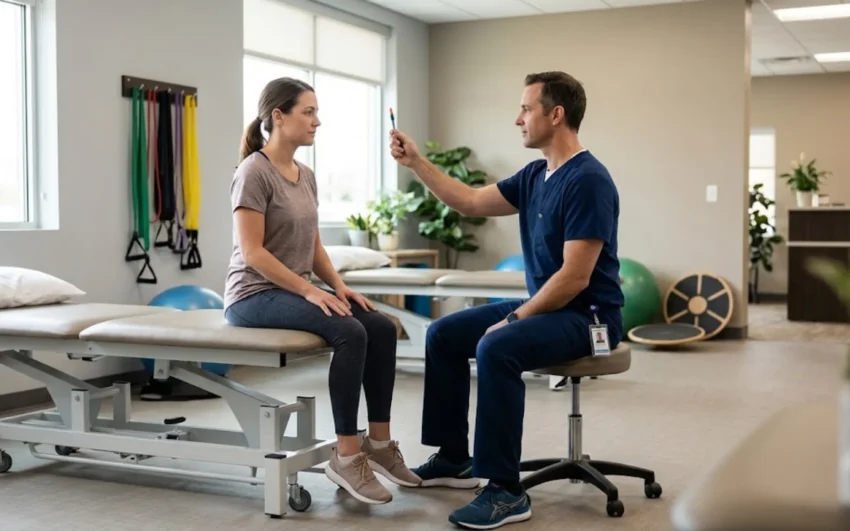
What Is Concussion Rehabilitation?
Concussion rehabilitation focuses on addressing symptoms and difficulties that may occur after a concussion, including problems with balance, movement, concentration, or daily activities.
While many people recover without specialized rehabilitation, others benefit from additional support. Depending on their symptoms, a care team may include physicians, physical therapists, occupational therapists, speech-language pathologists, or other specialists who help address individual recovery needs.
When Might Physical Therapy Help After a Concussion?
Physical therapy may be recommended when concussion-related symptoms affect balance, movement, neck function, or everyday activities. According to the American Physical Therapy Association, physical therapists can help evaluate and address certain physical impairments following a concussion.
Depending on the patient’s evaluation, rehabilitation may focus on:
- Balance difficulties: Improving stability and coordination.
- Dizziness: Addressing symptoms related to the vestibular system.
- Neck pain and stiffness: Evaluating discomfort and limited mobility.
- Movement limitations: Supporting a gradual return to appropriate physical activities.
Not everyone needs physical therapy after a concussion. A qualified healthcare professional can help determine whether it belongs in your recovery plan.
What Symptoms Do Clinicians Evaluate After a Concussion?
Concussion symptoms vary from person to person and may appear immediately or develop hours or days after the injury. According to the CDC, common symptoms include headaches, dizziness, fatigue, difficulty concentrating, and changes in sleep or mood.
During an evaluation, healthcare professionals may assess several areas:
| Area | What May Be Evaluated |
| Balance and coordination | Unsteadiness, walking difficulties, or changes in movement |
| Dizziness and vestibular function | Vertigo, motion sensitivity, and difficulty maintaining balance |
| Neck function | Pain, stiffness, and limitations in movement |
| Vision and eye movements | Visual tracking, focusing, and coordination |
| Thinking and memory | Concentration, memory, and cognitive difficulties |
| Sleep and mood | Changes in sleeping patterns, fatigue, or emotional well-being |
These findings help determine which treatments or specialists may be appropriate. Patients experiencing dizziness or balance problems may benefit from vestibular rehabilitation. You can also explore our article on physical therapy for vertigo and dizziness for more information.
What Are the Warning Signs After a Concussion?
Although many concussion symptoms improve with appropriate care, certain warning signs require immediate medical attention.
According to the CDC’s concussion guidance, call 911 or go to the nearest emergency department if someone experiences:
- A headache that gets worse and does not go away.
- Repeated vomiting.
- Seizures or convulsions.
- Increasing confusion, agitation, or unusual behavior.
- Slurred speech, weakness, numbness, or poor coordination.
- Difficulty staying awake or being awakened.
- Loss of consciousness or concerning changes in alertness.
- One pupil becoming larger than the other or double vision.
- An inability to recognize familiar people or places.
For infants and toddlers, additional warning signs include crying that cannot be consoled or refusing to nurse or eat. Do not wait for a physical therapy appointment if any emergency warning signs appear.
If other symptoms worsen or new symptoms develop, contact your treating healthcare professional promptly for guidance.
What Should You Expect During Concussion Physical Therapy?
If physical therapy is recommended, your first appointment generally includes a review of your injury, symptoms, and medical history, followed by an evaluation of areas such as balance, walking, neck mobility, and eye movements. Your therapist can then explain the findings and discuss an individualized treatment plan.
Rehabilitation may involve exercises and activities that address specific physical limitations. Treatment should be adjusted based on your symptoms, progress, and medical needs, consistent with guidance from the Academy of Neurologic Physical Therapy.
During your appointment, consider asking:
- Which symptoms or limitations will therapy address?
- How will my progress be evaluated?
- What should I do if symptoms become worse?
- How will my therapist communicate with my healthcare team?
- Are there activities or precautions I should discuss with my treating clinician?
How Can Caregivers Support Concussion Recovery?
Caregivers can help by monitoring changes in symptoms, behavior, concentration, and daily activities. Keeping a simple symptom log that records when symptoms occur and what seems to trigger them can provide useful information during follow-up appointments.
Because recovery varies from person to person, caregivers should follow the treating healthcare team’s recommendations and remain familiar with emergency warning signs that require immediate attention.
Get Support for Concussion Recovery
Concussion recovery looks different for everyone. If you’re experiencing ongoing dizziness, balance problems, neck discomfort, or difficulty with movement, physical therapy may be one part of your recovery plan.
An individualized approach can help address these challenges while supporting your recovery goals. If you’ve been diagnosed with a concussion and rehabilitation has been recommended, contact Innovative Healthcare Centers to discuss your options and request an appointment.