
If you’re experiencing unexplained numbness, tingling, muscle weakness, or nerve pain, your healthcare provider may recommend an EMG or nerve conduction study (NCS) to better understand what’s causing your symptoms.
These tests evaluate how your muscles and nerves function, providing information that can help guide diagnosis and treatment decisions. Knowing what happens during EMG and NCS testing, how to prepare, and what to expect afterward can make your appointment feel less intimidating.
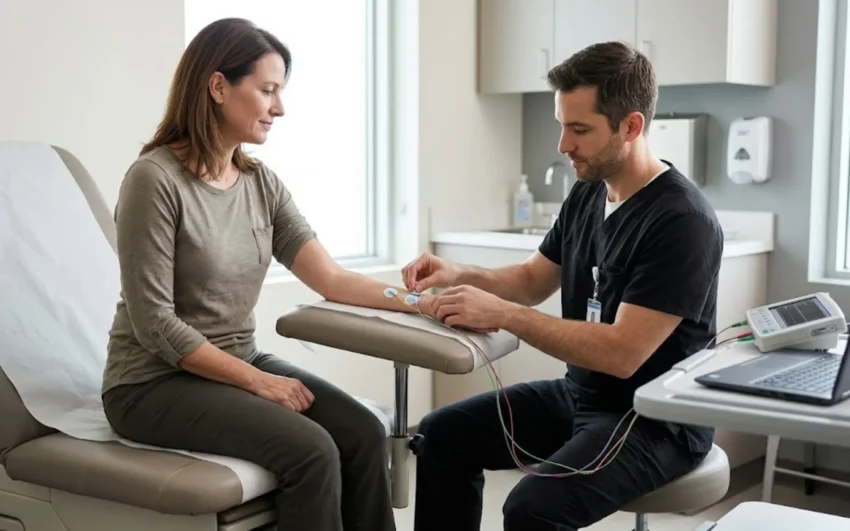
What Are EMG and NCS Tests?
Electromyography (EMG) and nerve conduction studies (NCS) are diagnostic tests that evaluate how your nerves and muscles are functioning. Although they’re often performed together, they measure different types of electrical activity.
An EMG test uses a thin needle electrode inserted into selected muscles to measure electrical activity at rest and during movement. A nerve conduction study uses small electrical pulses and electrodes placed on the skin to measure how nerves transmit signals.
According to MedlinePlus, these tests can help healthcare providers determine whether symptoms may be related to nerve or muscle problems.
Why Might Your Healthcare Provider Recommend EMG and NCS Testing?
EMG and NCS testing may be recommended when symptoms suggest a problem involving the nerves or muscles.
Common reasons for testing include:
- Numbness or tingling: Unusual sensations in the hands, arms, legs, or feet.
- Muscle weakness: Difficulty performing movements that previously felt normal.
- Nerve pain: Burning, shooting, or radiating discomfort.
- Muscle cramping: Persistent or unexplained muscle discomfort.
These tests may help evaluate conditions such as carpal tunnel syndrome, peripheral neuropathy, or nerve-related problems affecting the arms and legs.
However, EMG and NCS results are only one part of an evaluation. Your healthcare provider will consider your symptoms, medical history, and physical examination when determining a diagnosis.
What Happens During an EMG and NCS Test?
Understanding the testing process can help you feel more prepared for your appointment.
Nerve Conduction Study
During an NCS, electrodes are placed on your skin over specific nerves and muscles. Small electrical pulses stimulate the nerves, allowing the clinician to measure how the signals travel.
You may experience a brief tingling or tapping sensation during the stimulation. Several nerves may be tested depending on your symptoms.
Electromyography
During an EMG, a thin needle electrode is inserted into selected muscles to measure electrical activity. You may be asked to relax or gently contract a muscle while the clinician records its response.
Some discomfort is possible during the test, and mild soreness or bruising may occur afterward.
According to the American Association of Neuromuscular & Electrodiagnostic Medicine (AANEM), electrodiagnostic testing commonly takes approximately 20–90 minutes, depending on the examination.
If you’re nervous about the procedure, let the testing clinician know. They can explain each step and answer questions before beginning.
How Should You Prepare for EMG and NCS Testing?
Preparing for your appointment is generally straightforward, although you should always follow the specific instructions provided by your healthcare team.
Before your appointment:
- Keep your skin clean: Shower or bathe beforehand and avoid applying lotions, creams, or oils to the areas being tested.
- Wear comfortable clothing: Loose-fitting clothes make it easier to access the muscles and nerves being evaluated.
- Review your medications: Tell your clinician about prescription medications, over-the-counter products, supplements, and blood thinners. Do not stop taking medications unless your prescribing healthcare professional instructs you to.
- Mention medical devices or conditions: Inform your clinician if you have a pacemaker, implanted defibrillator, bleeding disorder, or other relevant medical condition.
- Bring relevant information: Have your referral, medication list, previous test results, and insurance information available if requested. Be ready to explain when your symptoms began, where they occur, and what makes them better or worse.
Before your appointment, ask who will perform and interpret your tests, how long the visit may take, and when you can expect your results.
For additional preparation guidance, review the AANEM’s patient information and MedlinePlus’s EMG and NCS overview.
Who Performs EMG and NCS Testing?
Electrodiagnostic testing requires specialized training to perform and interpret correctly.
According to the AANEM, needle EMG examinations should be performed by appropriately trained physicians, while nerve conduction studies may be conducted by trained technologists under physician supervision.
The specific professionals involved may vary by facility, so ask who will perform each part of your examination and who will interpret the findings.
You can also explore Innovative Healthcare Centers’ EMG and NCS services for additional information.
What Do EMG and NCS Results Mean?
After testing, a qualified healthcare professional reviews the findings to evaluate how your nerves and muscles are functioning.
Results may help identify certain nerve or muscle abnormalities, but they do not always explain every symptom or provide a diagnosis on their own.
Your healthcare provider will interpret the findings alongside your medical history, symptoms, examination results, and any other necessary tests.
Depending on the findings, your next steps may include additional evaluation, follow-up care, or treatment recommendations.
Prepare for Your EMG and NCS Appointment With Confidence
EMG and NCS testing can provide valuable information about nerve and muscle function when symptoms such as numbness, tingling, weakness, or nerve pain need further evaluation.
Understanding the testing process and preparing ahead of time can help you feel more comfortable and know what questions to ask.
If your healthcare provider has recommended electrodiagnostic testing, contact Innovative Healthcare Centers to learn more about appointment options and next steps.