
Sleeping on the floor can help lower back pain for some people — but it often makes symptoms worse for others. Whether it’s beneficial depends on your spinal alignment, sleep position, and the underlying cause of your pain.
Some people experience short-term relief from firmer support, especially if their mattress is very soft or worn out. Others wake up with increased stiffness, pressure, or pain after sleeping on the floor, particularly if disc or nerve irritation is involved. Understanding when floor sleeping helps can prevent unnecessary discomfort and guide you toward better long-term solutions.

Why People Try Sleeping on the Floor for Back Pain
The idea behind sleeping on the floor is simple: firmer surfaces may prevent the spine from sinking into poor positions during sleep. When a mattress lacks support, the hips and midsection can dip downward, placing additional strain on the lower back.
People who wake up stiff or sore often assume their pain is related to sleep posture, especially if symptoms resemble discomfort that appears after sleeping or first thing in the morning.
When Sleeping on the Floor Might Help
In certain situations, sleeping on the floor can temporarily reduce lower back pain. This typically occurs when pain is related to poor mattress support rather than a structural injury.
People who may notice short-term improvement include those who:
- Sleep on very soft or sagging mattresses
- Feel better with firmer support
- Have mild, non-radiating lower back discomfort
In these cases, the floor may act as a firm surface that limits excessive spinal movement during sleep.
When Sleeping on the Floor Can Make Back Pain Worse
While firmness can be helpful, too much firmness can increase strain. Sleeping directly on the floor provides no contouring or pressure relief, which can overload the lower back, hips, and shoulders.
People with disc-related issues or nerve sensitivity often find that floor sleeping worsens stiffness and pain, especially when symptoms overlap with conditions like disc herniation vs bulging disk. Side sleepers are particularly vulnerable because unsupported hips and shoulders can pull the spine out of alignment.
The Role of Sleeping Position
Sleeping position plays a major role in how your back responds to different surfaces.
Back sleepers may tolerate firmer surfaces better because weight is distributed more evenly. Placing a pillow under the knees can reduce strain on the lower back and help maintain neutral alignment.
Side sleepers often struggle on the floor without cushioning. Without support under the hips and shoulders, the spine may curve unnaturally, contributing to pain patterns similar to lower back pain when coughing or rotational stress.
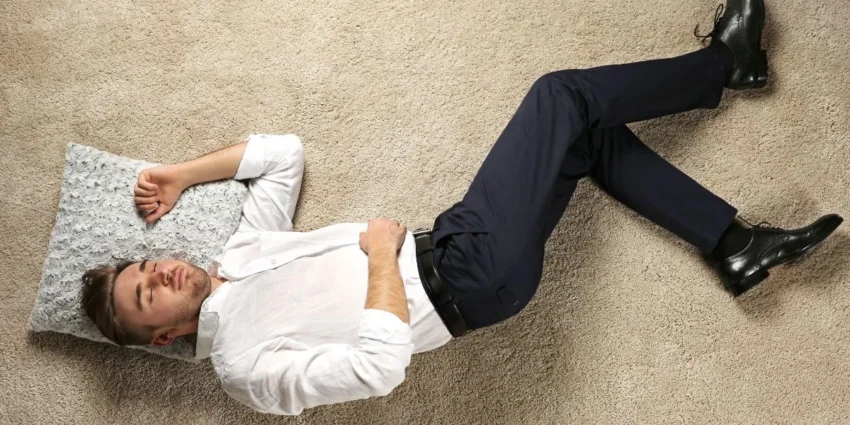
Why Floor Sleeping Isn’t a Long-Term Solution
Even if sleeping on the floor provides short-term relief, it rarely addresses the underlying cause of lower back pain. Ongoing discomfort is often related to muscle imbalances, joint stiffness, movement mechanics, or repetitive strain during daily activities.
For many people, back pain is influenced more by how they move and load their spine during the day than by sleep position alone. This is especially true when symptoms are aggravated by bending or lifting, similar to lower back pain when squatting.
Better Alternatives to Sleeping on the Floor
Instead of moving to the floor, consider adjustments that provide firmness without sacrificing support:
- Using a firmer mattress or supportive topper
- Replacing an old or sagging mattress
- Adjusting pillow height for better neck and spine alignment
- Placing a pillow under the knees (back sleepers) or between the knees (side sleepers)
These changes often improve comfort and alignment more effectively than floor sleeping alone.
When Lower Back Pain at Night Signals a Bigger Issue
Occasional discomfort from sleep position is common, but persistent or worsening pain should not be ignored. If lower back pain:
- Continues despite mattress or pillow changes
- Worsens overnight or in the morning
- Is accompanied by stiffness, numbness, or leg pain
It may indicate a condition that requires professional evaluation rather than further sleep adjustments.
Next Steps for Lower Back Pain That Affects Your Sleep
If lower back pain is interfering with your sleep, sleeping on the floor may not address the real cause. Lasting relief usually comes from understanding how your spine moves and what’s contributing to your discomfort.
If lower back pain is disrupting your sleep, contact Innovative Healthcare Centers to schedule an evaluation and get personalized guidance.