
Shoveling snow may look harmless, but it’s one of the most common winter activities linked to lower back pain and injury. Repetitive bending, twisting, and lifting heavy snow can quickly strain the muscles and joints of the lower back—especially when the ground is icy or uneven.
Learning how to avoid lower back pain from shoveling snow can help you protect your spine, reduce injury risk, and get through winter storms without lingering soreness or setbacks. Many people who experience winter back pain describe symptoms similar to other activity-related conditions, including lower back pain when squatting or lifting.

Why Shoveling Snow Is So Hard on Your Lower Back
Snow shoveling combines several movements that place stress on the lower back at the same time. Lifting heavy loads, twisting to throw snow, and bending forward repeatedly all increase spinal strain. Wet or compacted snow is especially problematic because it weighs far more than it appears.
Cold temperatures also make muscles stiffer and less flexible, which increases the risk of strain if you jump into shoveling without preparing your body. According to the Centers for Disease Control and Prevention (CDC), snow shoveling places significant stress on the back due to repetitive lifting, twisting, and sudden exertion—especially when handling heavy or wet snow.
Warm Up Before You Start Shoveling
One of the biggest mistakes people make is treating snow shoveling like a casual chore instead of physical labor. Before heading outside, take a few minutes to warm up your body.
Gentle movements such as marching in place, arm swings, or light torso rotations can increase blood flow and loosen tight muscles. Warming up is especially important if you already deal with stiffness or wake up with discomfort similar to upper back pain after sleeping.
Use the Right Shovel for the Job
The type of shovel you use can significantly affect how much stress is placed on your back. A shovel that is too short forces you to bend forward more, while a heavy shovel increases the load on your spine.
Ergonomic shovels with curved or adjustable handles help keep your back in a more neutral position. Lighter shovels can reduce strain over time, which is especially helpful for people who already experience activity-related discomfort such as lower back pain when deadlifting.
Lift With Your Legs, Not Your Back
Proper lifting mechanics are one of the most important ways to prevent lower back pain while shoveling snow. Instead of bending at the waist, focus on using your legs and core to move the load.
When lifting snow:
- Keep the shovel close to your body
- Bend at the knees rather than the waist
- Tighten your core before lifting
- Pivot with your feet instead of twisting your spine
Twisting while lifting is a common cause of sudden back strain and can aggravate disc-related issues, including symptoms seen in disc herniation vs bulging disk.
Push Snow When Possible Instead of Lifting
Whenever conditions allow, pushing snow to the side is safer than lifting and throwing it. Pushing keeps the load closer to the ground and reduces compressive forces on the spine.
This technique works especially well with light or powdery snow and can significantly reduce lower back strain over time.
Take Breaks and Pace Yourself
Snow shoveling often turns into a race to “get it done,” but fatigue is one of the biggest contributors to injury. As muscles tire, posture and lifting mechanics break down, shifting stress to the lower back.
Taking short breaks every 10–15 minutes allows your muscles to recover and helps maintain safer movement patterns throughout the task.
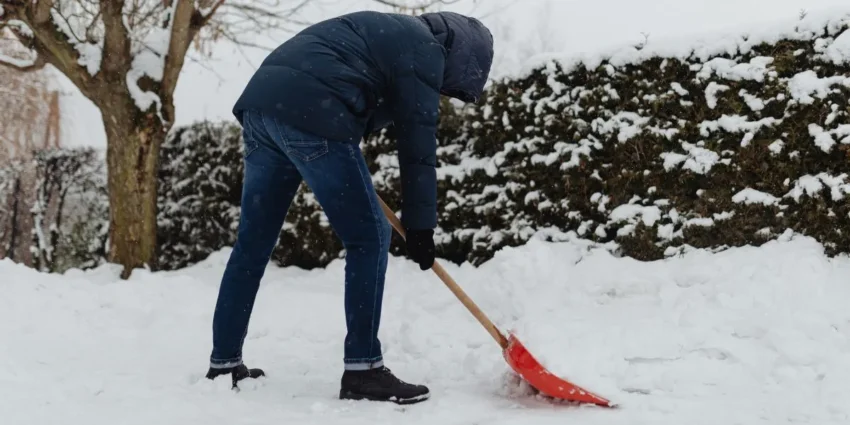
Avoid Overreaching and Throwing Snow Too Far
Overreaching with a shovel or throwing snow long distances increases the risk of sudden back injury. Keep snow close to your body and move smaller amounts more frequently instead of lifting large loads at once.
Throwing snow over your shoulder places significant rotational stress on the spine and should be avoided whenever possible.
Dress for Movement, Not Just Warmth
Bulky winter clothing can restrict movement and alter lifting mechanics. Wearing warm but flexible layers allows you to maintain better posture and range of motion while shoveling.
Supportive footwear with good traction is also essential. Slipping while lifting snow dramatically increases the risk of lower back injury.
Know When to Stop
Pain is a warning sign, not something to push through. Continuing to shovel despite discomfort increases the risk of muscle strains and more serious spinal injuries.
Stop shoveling if you notice:
- Sharp or worsening lower back pain
- Stiffness that limits movement
- Pain that changes how you lift or walk
- Symptoms that don’t improve with rest
In some cases, lingering pain after shoveling may resemble other issues such as lower back pain when coughing, which should be evaluated by a professional.
What to Do If Lower Back Pain Starts After Shoveling
If mild soreness develops after shoveling, rest and gentle movement are often helpful. Avoid prolonged sitting, which can increase stiffness, and aim to stay lightly active as tolerated.
However, if pain persists, worsens, or is accompanied by numbness, tingling, or pain radiating down the leg, professional care may be needed to prevent long-term issues.
Get Help for Winter-Related Back Pain
Lower back pain from shoveling snow is common, but it doesn’t have to become a long-term problem. Proper technique, pacing, and early intervention can make a significant difference in recovery.
At Innovative Healthcare Centers, our team helps patients address back pain safely and effectively through individualized care plans focused on movement, strength, and injury prevention. If lower back pain is lingering after shoveling snow, contact Innovative Healthcare Centers to schedule an evaluation and get expert guidance before symptoms worsen.