
Living with Parkinson’s disease can make everyday activities like walking, maintaining balance, or speaking clearly more challenging. While medication plays an important role in managing symptoms, rehabilitation services can also help support movement, communication, and independence.
Physical therapy and speech therapy address different challenges associated with Parkinson’s disease. Understanding how these therapies work and when they may be helpful can make it easier to explore the right care options for your needs.
What Is Parkinson’s Rehabilitation?
Parkinson’s rehabilitation focuses on maintaining mobility, improving daily function, and addressing challenges associated with the condition. Because Parkinson’s affects each person differently, rehabilitation plans are tailored to individual symptoms and goals.
According to the Parkinson’s Foundation, physical, occupational, and speech therapies can play important roles in managing Parkinson’s symptoms alongside medical treatment. These services may help patients maintain independence and participate more comfortably in everyday activities.
How Does Physical Therapy Help People With Parkinson’s?
Physical therapy for Parkinson’s focuses on movement-related challenges, including walking, balance, strength, flexibility, and coordination.
As Parkinson’s progresses, some people experience stiffness, slower movements, or difficulty with activities such as standing up from a chair, turning, or navigating stairs. Physical therapy may help patients practice these movements and develop strategies for performing daily activities more safely.
Balance training and fall prevention are also important parts of rehabilitation. Physical therapists can evaluate mobility concerns and recommend exercises or modifications based on individual needs.
The American Physical Therapy Association explains how physical therapy can support mobility and daily function for people living with Parkinson’s.
For additional information, explore Innovative Healthcare Centers’ Parkinson’s disease rehabilitation services and balance and fall prevention programs.
How Can Speech Therapy Support Parkinson’s Rehabilitation?
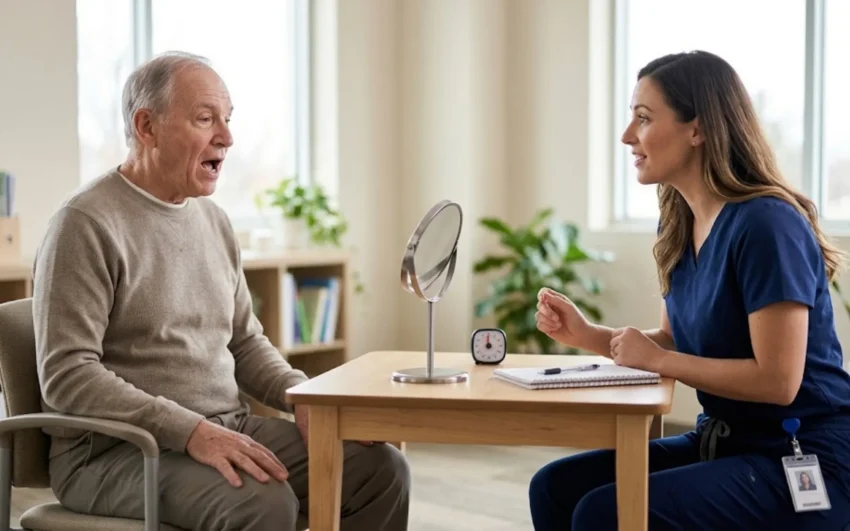
Parkinson’s disease can affect the muscles involved in speaking, making it harder to communicate clearly or maintain an appropriate voice volume.
Speech-language pathologists help evaluate changes in speech, voice, and communication. Depending on the patient’s needs, treatment may focus on improving vocal strength, speech clarity, and communication strategies.
Some people with Parkinson’s also experience swallowing difficulties. A speech-language pathologist can evaluate these concerns and recommend appropriate management strategies.
Speech therapy goals are individualized, helping patients address communication challenges that may affect conversations, social interactions, and everyday activities.
What Are LSVT BIG and LSVT LOUD?
LSVT BIG and LSVT LOUD are specialized rehabilitation programs developed to address movement and communication challenges associated with Parkinson’s disease.
LSVT BIG focuses on practicing larger, more deliberate movements. This approach may help address difficulties involving walking, reaching, balance, and other everyday physical activities.
LSVT LOUD focuses on improving voice volume and speech clarity. The program uses structured exercises to help patients produce a stronger, more consistent speaking voice.
Both programs involve intensive, structured treatment and regular practice. Because participation requirements and availability can vary, patients should discuss whether these approaches are appropriate for their needs.
Learn more about LSVT BIG and LSVT LOUD at Innovative Healthcare Centers.
When Should Someone With Parkinson’s Begin Rehabilitation?
Rehabilitation does not have to wait until Parkinson’s symptoms become severe. Physical and speech therapy may be helpful earlier in the condition and can be revisited as symptoms or daily needs change.
The Parkinson’s Foundation encourages early rehabilitation evaluations and ongoing reassessment. A neurologist or other qualified healthcare professional can help determine which services are appropriate as mobility, balance, or communication needs evolve.
How Can Caregivers Support Parkinson’s Rehabilitation?
Family members and caregivers can provide valuable support by noticing changes in movement, communication, or daily activities.
For example, a caregiver may observe that someone is having more difficulty getting out of a chair, walking through narrow spaces, or speaking loudly enough to be heard.
Sharing these observations with healthcare professionals can help identify meaningful rehabilitation goals.
Caregivers may also help patients stay consistent with recommended home exercises and monitor changes in daily function. Treatment should remain guided by qualified professionals, with exercises adapted to the individual’s abilities and safety needs.
What Should You Know Before Starting Parkinson’s Rehabilitation?
Before beginning physical or speech therapy, it’s helpful to understand which services are appropriate and what participation may involve.
Consider asking your healthcare provider or rehabilitation clinic:
- Treatment goals: Which symptoms or daily activities will therapy address?
- Therapist qualifications: Does the clinician have experience treating Parkinson’s or certification in specialized programs such as LSVT?
- Program availability: Are the recommended services offered at your preferred location?
- Appointment requirements: Is a physician’s order, referral, or insurance authorization necessary?
- Home practice: What exercises or activities may be recommended between appointments?
It’s also important to discuss recent falls, changes in balance, swallowing concerns, or new symptoms with your healthcare team.
Sudden neurological symptoms, such as new facial drooping, arm weakness, or difficulty speaking, require immediate emergency medical attention.
Get Support for Parkinson’s Rehabilitation
Living with Parkinson’s presents different challenges for every individual. Physical and speech therapy may help support mobility, balance, communication, and everyday function as part of an individualized care plan.
If you or a loved one is exploring Parkinson’s rehabilitation, contact Innovative Healthcare Centers to learn more about available services and appointment options.