
Pain on the inside of the elbow after bicep curls is often caused by overuse, tendon irritation, or improper lifting mechanics. The repetitive gripping and pulling involved in curls can place stress on the tendons that attach around the inner elbow, especially when weight, volume, or technique become too much for the area to handle.
In many cases, the discomfort starts gradually and becomes more noticeable during or after workouts.
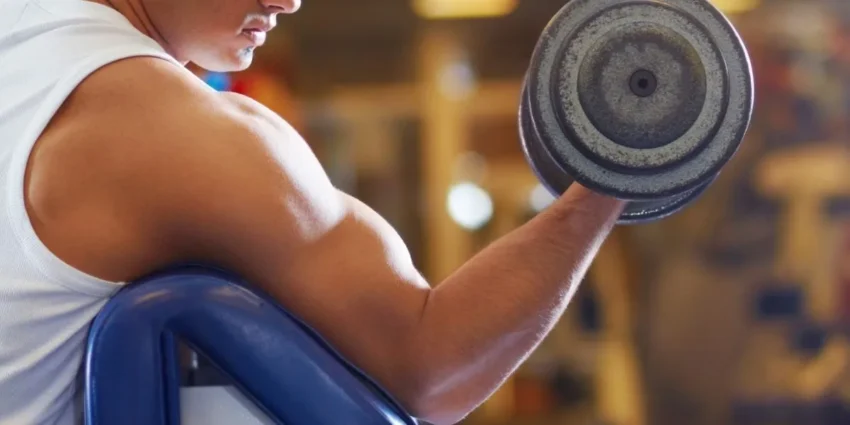
Why Bicep Curls Can Irritate the Inner Elbow
During a curl, the muscles and tendons around the elbow work together to stabilize the joint while lifting weight. Repeated strain can irritate these tissues, particularly when form breaks down or recovery is limited.
Grip position can also contribute. Using a straight bar, gripping too tightly, or allowing the wrists to bend excessively may increase stress on the inner elbow. Similar movement-related strain is often seen in elbow pain when curling, where repetitive loading irritates the surrounding tendons.
Common Symptoms to Watch For
Inner elbow pain after curls may present in several different ways depending on the underlying cause.
- Aching or tenderness along the inside of the elbow
- Pain during gripping or lifting movements
- Stiffness or soreness after workouts
- Discomfort that worsens over time with continued training
In some cases, symptoms may extend slightly into the forearm or wrist, especially when tendon irritation becomes more involved.
When It May Be More Than Muscle Soreness
Mild soreness after exercise is normal, but persistent or sharp pain is different.
Pain that continues outside of workouts, interferes with gripping, or becomes more intense with everyday activities may indicate tendon irritation or overuse injury. These symptoms can overlap with patterns discussed in understanding and managing shoulder elbow and wrist pain, where strain in one area affects nearby joints and movement patterns.
According to the National Institutes of Health, repetitive movements and overuse are common contributors to tendon-related elbow pain, especially when tissue stress exceeds recovery capacity.
Small Technique Changes That May Help
Reducing stress on the elbow often starts with adjusting mechanics and training habits.
- Lowering weight temporarily may reduce irritation while the area calms down
- Keeping the wrists neutral can decrease strain on the tendons
- Avoiding excessive swinging or momentum may improve elbow positioning
- Allowing adequate recovery between workouts can help prevent overload
In some cases, changing grip style or exercise variation may also improve comfort during training.
When to Seek Evaluation
Pain that continues despite rest or technique adjustments should not be ignored. Increasing discomfort, weakness, or pain during normal daily activities may indicate a more significant overuse issue.If symptoms persist or begin limiting exercise and movement, you can review related warning signs in what are red flags for shoulder pain or schedule an evaluation to determine the cause and begin the appropriate treatment plan.