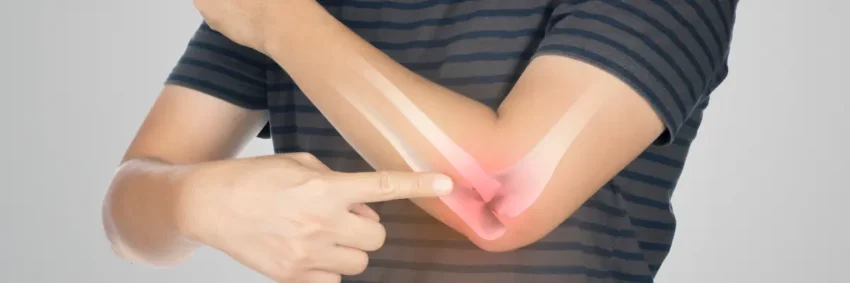
Tennis elbow typically takes six to twelve weeks to heal for mild cases, three to six months for moderate cases, and up to a year for stubborn or severe cases. The recovery time depends on how early you start treatment, how consistently you load the tendon, and whether aggravating activities are modified. Tennis elbow, or lateral epicondylitis, is a tendon irritation where the forearm extensor tendons attach on the outside of the elbow. Innovative Healthcare Centers is here to help you through this process.

What’s Really Going On With Tennis Elbow
Tennis elbow is best described as a tendinopathy rather than a simple sprain. The tendon fibers at the lateral epicondyle become overloaded by repeated gripping, wrist extension, and forearm rotation. Instead of an acute tear that follows a predictable sprain timeline, tendinopathy is a continuum. Early irritation brings pain with gripping and lifting a coffee mug. Ongoing overload can lead to stiffness in the morning, tenderness on the outer elbow, and reduced grip strength. Because tendons receive less blood flow than muscles, they adapt slowly, which is why recovery often spans weeks to months rather than days.
Typical Healing Timeline and What to Expect Week by Week
Many people feel meaningful relief within six to eight weeks when they start early, adjust aggravating tasks, and follow a progressive exercise program. In the first two to four weeks, the focus is on calming symptoms and preventing repeated overload. You may still feel pain with gripping and lifting, but sharp twinges should give way to a duller ache as inflammation subsides and you begin gentle isometric loading. Between weeks four and eight, the tendon usually tolerates more demanding exercises such as wrist extensor eccentric training and forearm rotation with light resistance. Daily activities become easier, but the elbow may flare after heavier tasks if you jump too quickly.
From eight to twelve weeks, many people are back to most work and household duties with only occasional soreness. If symptoms have persisted for several months before starting treatment, your arc may be longer. Chronic cases that have smoldered for six months or more may need three to six additional months of steady, progressive loading and activity modification to fully settle.
Why Some Cases Heal Faster Than Others
Recovery time depends on several practical variables. The sooner you address the problem, the faster tendons respond to loading. People who continue to push through pain with repetitive gripping, heavy lifting, or high-volume keyboard work generally take longer. Technique also matters; lifting with the palm up, maintaining neutral wrist position, and spreading load across both hands can reduce strain on the extensor tendon. Age, overall health, and metabolic factors such as diabetes or smoking status can slow tendon remodeling.
Self-Care During the Early Phase
Early care is about reducing daily strain while keeping the tendon engaged. Relative rest is better than total rest. That means temporarily limiting or modifying the specific tasks that spike your pain, not immobilizing the elbow entirely. Short, intermittent use of a counterforce strap can decrease peak load on the tendon during tasks that you cannot avoid. Ice or topical analgesics can help manage symptoms after activity, especially at the end of the day. Forearm stretching should be gentle and brief to avoid irritating the tendon. The cornerstone is a daily exercise routine that starts with comfortable isometric holds of the wrist extensors and gradually progresses to slow, controlled eccentric and concentric loading under professional guidance.
How Innovative Healthcare Centers Helps You Heal
At Innovative Healthcare Centers, our approach combines precise diagnosis, hands-on care, and a phased loading program designed for your work and sport demands. Your clinician will first confirm that your pain is truly from tennis elbow and not from cervical referral, radial tunnel syndrome, or joint arthritis masquerading as lateral elbow pain. We then outline a staged plan that moves from pain relief and tissue protection to strength, endurance, and return to performance. Manual therapy may be used to improve elbow and wrist mobility and to reduce protective muscle tone in the forearm. Therapeutic exercise is tailored and progressed based on how your tendon responds, not by the calendar alone. When appropriate, we incorporate modalities such as shockwave or instrument-assisted soft tissue work to stimulate tendon healing. Just as importantly, we coach you on workstation setup, tool grips, lifting strategies, and training volume so daily life supports recovery rather than competing with it.
The Role of Progressive Loading
Tendons remodel in response to the right dose of tension. Too little load and the tissue remains weak and sensitive; too much load and pain flares. Isometric exercises often come first because they can dampen pain while maintaining some tendon capacity. Eccentric training, where you slowly lower the wrist against resistance, helps the tendon reorganize and become more tolerant to stress. As pain decreases and strength returns, concentric and functional tasks enter the plan: gripping, lifting, carrying, and sport-specific drills. We progress weights, repetitions, and frequency gradually while watching for next-day soreness. That next-day response is a more reliable gauge of tendon tolerance than what you feel during the set, and it guides each week’s adjustments.
Return to Sport and Work
For desk work, many patients can continue working with modifications such as adjusting mouse size, switching to a vertical mouse, raising the chair to keep wrists neutral, and taking microbreaks for forearm relaxation. For manual labor, the timeline depends on the physical demands. Light duty is often reasonable within the first month if pain can be kept below a mild level during and after tasks. Full return to heavy repetitive lifting may require eight to twelve weeks of progressive strengthening. For racquet and paddle sports, reintroduction begins with technique drills, lighter racquets or reduced string tension, and shorter sessions two to three times per week. The green light for full participation is when you can complete your typical session without a next-day pain spike or grip weakness.
Preventing Recurrence After You Heal
Once you feel better, maintenance matters. Continuing a brief strengthening routine two or three days per week preserves tendon capacity. Pay attention to the total weekly volume of gripping and wrist extension in both work and sport. Mix tasks so you are not repeating the same motion for hours without a break. Keep technique cues handy: lift with the palm up when possible, avoid lifting with the wrist cocked back, and distribute load using both hands or assistive tools. If you feel early warning signs such as morning stiffness or tenderness at the bony bump on the outer elbow, scale back volume for a few days and restart your isometrics to stay ahead of the curve.

Get Started Today
If tennis elbow pain is keeping you from work, sports, or daily activities, don’t wait for it to linger for months on end. At Innovative Healthcare Centers, our team is ready to create a personalized treatment plan that addresses your pain at its source and helps you heal faster. Schedule your appointment today and take the first step toward lasting relief, stronger movement, and getting back to the activities you enjoy most.