If you have tennis elbow, you may wonder whether it’s safe to continue lifting weights or doing upper body workouts. The good news is that many people with lateral epicondylitis can still train safely with the right exercise modifications. Choosing tendon-friendly exercises and avoiding excessive gripping can help reduce strain on the elbow while allowing you to maintain strength. At Innovative Healthcare Centers, we help patients stay active and continue exercising safely while recovering from tennis elbow
Understanding Tennis Elbow
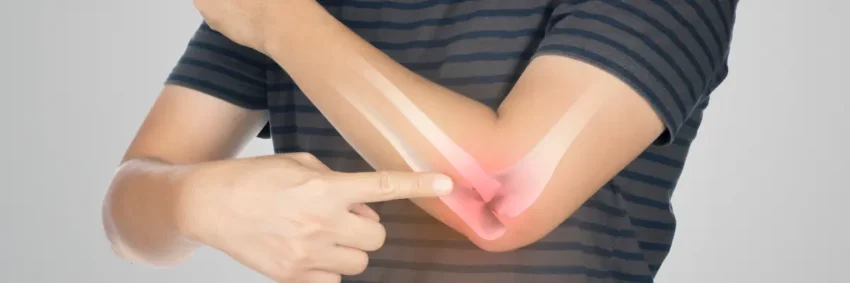
Tennis elbow, medically known as lateral epicondylitis, is a condition caused by irritation and small tears in the tendons that attach to the outside of the elbow. It commonly develops from repetitive gripping, lifting, typing, racquet sports, or repetitive gym exercises. Symptoms often include burning pain on the outside of the elbow, forearm tightness, reduced grip strength, and discomfort during lifting or wrist movements.
Can You Still Workout With Tennis Elbow?
While some exercises may aggravate symptoms, complete rest is not always necessary. Many patients can continue modified strength training routines while the tendon heals. The key is avoiding movements that create excessive stress on the forearm extensors while gradually rebuilding tendon tolerance through controlled loading.
Guiding Principles for Training With Tennis Elbow
When deciding which upper body exercises are safe, think in terms of tendon-friendly mechanics. Movements are usually more comfortable when the wrist is in a neutral position rather than bent back. Grips that turn the palms upward or inward often reduce stress on the irritated tendon. Using lighter weights with slow, controlled repetitions helps maintain strength while allowing the tendon to adapt gradually. And perhaps most importantly, your next-day soreness is the best guide: mild discomfort is acceptable, but pain that lingers or spikes after exercise signals that modifications are needed.
Shoulder and Back Exercises That Are Typically Safe
Most patients with tennis elbow can continue shoulder and back training with slight adjustments. Overhead pressing movements such as dumbbell shoulder presses are usually tolerable if you keep the wrist in line with the forearm and avoid over-gripping the handle. Lateral raises with light dumbbells or resistance bands target the deltoids without heavily involving the forearm extensors. Rows are excellent for posture and back strength, but overhand barbell rows may be painful; switching to a neutral grip with dumbbells or a cable handle often removes strain from the elbow. Lat pulldowns with a wider, neutral grip attachment are often more comfortable than narrow overhand pull-ups. At Innovative Healthcare Centers, we often coach patients on grip modifications that allow back and shoulder strength to progress while protecting the tendon.
Some shoulder exercises that are often well tolerated include:
- Dumbbell shoulder presses with a neutral grip
- Lateral raises
- Front raises
- Resistance band shoulder exercises
- Landmine presses
Best Chest Exercises for Tennis Elbow
Bench pressing and push-ups can be difficult if the grip is too tight or the wrist is extended. One option is to use dumbbells instead of a barbell, as this allows your hands to rotate to a neutral position, reducing forearm tension. Push-ups on push-up handles or dumbbells also keep the wrist straight, which feels better than pressing from the floor with bent wrists. For many patients, chest fly variations with cables or bands are comfortable, provided the resistance is light and the grip remains neutral. The focus should be on slow control and avoiding gripping harder than necessary.
Arm Training: Biceps and Triceps With Caution
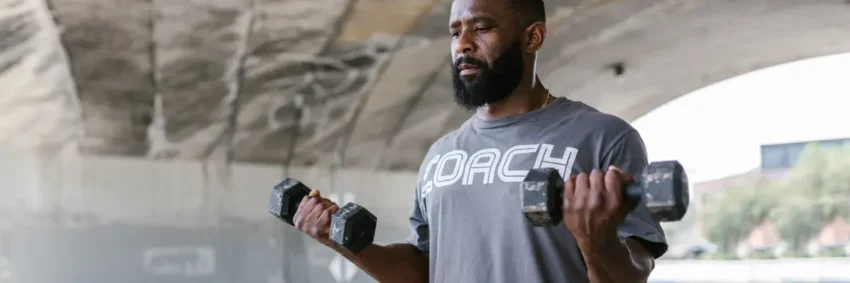
Direct arm training often requires the most modification. For biceps, curls with the palm facing up (supinated) can aggravate tennis elbow because the wrist extensors work hard to stabilize the position. Switching to hammer curls, where the palms face each other, often relieves strain while still building biceps and brachialis strength. Cable curls with a rope attachment can also work because the wrist and hand can rotate naturally. For triceps, pushdowns with a rope are usually more comfortable than a straight bar, since the neutral hand position takes stress off the lateral elbow. Overhead triceps extensions may be tolerable if light, but they should be tested carefully. At Innovative Healthcare Centers, we monitor patient tolerance closely and adjust based on tendon response rather than sticking to rigid rules.
Core Engagement During Upper Body Training
Another way to stay strong without flaring tennis elbow is to emphasize compound, full-body movements that engage the core and shoulders while minimizing stress at the wrist. For example, planks, side planks, and Pallof presses challenge trunk stability while sparing the elbow tendons. Carry variations using lighter kettlebells or dumbbells in a suitcase or front-rack position can train the core and shoulders, provided the load is not so heavy that grip strain irritates the elbow. Patients are often surprised how much upper body training they can maintain when the focus shifts to whole-body stability and control.
Exercises to Approach With Caution or Avoid
Some exercises are notorious for aggravating tennis elbow and are best avoided until healing has progressed. Heavy reverse curls, upright rows, and chin-ups with a narrow pronated grip tend to place high demand on the extensor tendons. Barbell bench press with a straight bar may also be more stressful than dumbbell variations. Overly tight gripping on machines or barbells can also delay recovery. These exercises can often be reintroduced later, once tendon tolerance has improved, but early on they may set you back. Tennis elbow typically takes six to twelve weeks to heal for mild cases, three to six months for moderate cases, and up to a year for stubborn or severe cases.
How Innovative Healthcare Centers Builds Safe Training Programs
Our team at Innovative Healthcare Centers understands that many patients do not want to stop exercising completely. That’s why we build individualized programs that balance rehabilitation and strength training. We begin with a thorough evaluation of your elbow pain, movement patterns, and training goals. From there, we design a plan that includes tendon-specific rehab exercises, modified upper body training, and manual therapy when needed to reduce stiffness. By guiding patients through safe loading progressions, we help them regain tendon capacity while keeping the rest of the body strong.

Get Started Today
At Innovative Healthcare Centers, we help active adults, athletes, and gym-goers recover from tennis elbow without giving up exercise completely. Our team creates customized rehabilitation and strength programs designed to reduce pain, improve tendon healing, and safely return patients to lifting, sports, and daily activities. Schedule a consultation with our team to learn how you can train smart, heal fully, and get back to doing what you love.